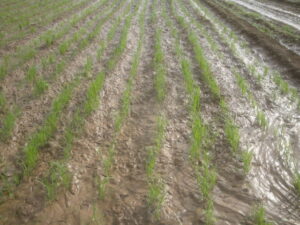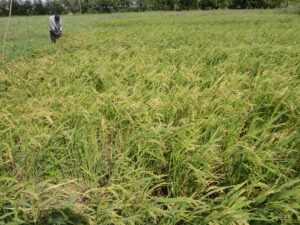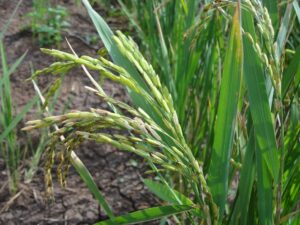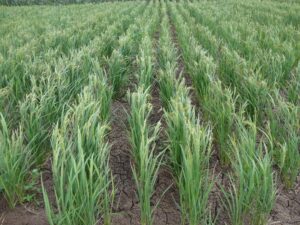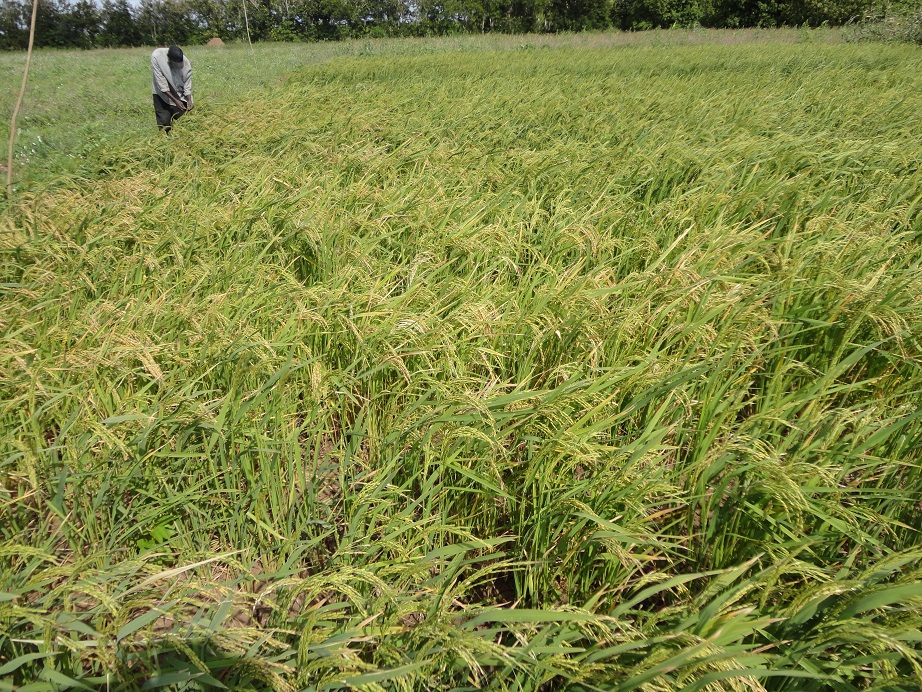
Upland Rice Crop
Darusalam Seed Company Farm
Deyr 2011/2012
Background
Maize is the main staple food crop grown in irrigated areas of Shabelle and Juba valleys followed by Sorghum main staple food crop grown also in dry regions of Somalia. Problems hindering food crop production are not yet completely solved.
The Darusalam Seed Company (DASE) are trying identify constraints of food crop production in Lower Shabelle; moreover, come with equitable solution for the interest of Lower Shabelle region.
The DASE is making enormous efforts on reviving research on Upland Rice as well as maize crop – main food basket of Lower Shebelle. The DASE is gradually specializing in the production of improved seeds; as well as processing and supply certified seeds to interested farmers and Agencies involved in the sector of crop agriculture. Thus, besides locally adapted maize food crop, the DASE is trying in the absence of Research and Extension in Somalia, introduction of Upland Rice in Darussalam, at irrigated areas of Awdegle.
The objective is directed towards identification of suitable varieties of Upland Rice for irrigated areas of Lower Shebelle; hoping to find out locally adapted Upland Rice that could be a substitute food for imported rice. Earlier in the prewar era, rice research at Jowhar, Mugaambo, Faanoole Irrigation Projects were ongoing successful work till the collapse of the former government in the prewar era. The Central Agricultural Research Stations (CARS) at Afgoi tested Upland Rice in Pump irrigated areas of Lower Shabelle. Footsteps of those Projects were devastated by the civil disorders in the postwar.
The DASE is actually hoping revive research on Upland Rice as well as maize for the welfare of Farming Community of Lower Shabelle. The outcome from these efforts will be at large a positive gain to irrigated farming community of Somalia. For this reason, the DASE has put in action its aspiration by introducing four varieties of Upland Rice at Darussalam.
1.1 Gu 2011/2012
The Gu 2011 was abnormal across the Somali nation. Observation plots of Upland Rice emerged with pump irrigation. The Hagai rain started first week of July and continued up to mid August. Total Hagai rainfall received during July was 117.5mm distributed over 9 days period at Darussalam Seed Production Farm.
1.2 Upland Rice
Four varieties of Upland Rice were planted at the Seed Company Farm of Darussalam for observation trial on their adaptability at Lower Shabelle environment. The varieties were denoted as Nerica1, Nerica2, Nerica4 and Nerica10.
Below is a table showing notes on field records during the Gu 2011:
| Notes on Field Records | Date | Remarks |
| Land preparation | 12-3-2011 | |
| Planting | 5-6-2011 | |
| Irrigation | 6-6-2011, 18-6-2011 ,29-6-2011, 10-8-2011 | |
| Seedling Emergence | 12/6/2011 | |
| Weeding | 17-6-2011, 26-6-2011, 6-7-2011, 20-7-2011, 14-8-2011 | up-rooting weeds by hand |
| Spraying | 19-6-2011, 2-7-2011 | Bulldock 0.05 Gr |
| Fertilizer application | 19-6-2011 | 100 N Kg/Ha |
| Rainfall | 8-16/7/2011 | Received 117.5mm |
| Flowering | Nerica10 10/7/2011.
Nerica1, Nerica2 and Nerica4 flowered on14/7/2011 |
|
| Harvesting | 8-9-2011 |
1.3 Results
The four varieties of Upland Rice were planted on different plot sizes due to context of seeds received from the Seed Supplier. So far, neither data on growth parameters or yield components were collected from the observation trials. Only seed yield/ plot converted into production/Ha were recorded for the time being. But in future, relevant data on growth and components of yield will be recorded.
Below is a table showing yield/unit area of the four varieties. It seems that, Nerica2 and Nerica10 varieties are promising and over yielded the other two varieties of upland Rice.
| Upland Rice Varieties
|
||||
| No | Crop variety Entries | Area/M2 | Seed weight (Kg)/ M2 | Prod.(Kg/Ha) |
| 1 | Nerica 1 | 391 | 21 | 538 |
| 2 | Nerica 2 | 170 | 26 | 1529 |
| 3 | Nerica 4 | 476 | 41.5 | 872 |
| 4 | Nerica 10 | 697 | 85.5 | 1227 |
1.4 Conclusion and Recommendations
The same trial will be repeated in the Deyr 2011/2012. Bird damage on seeds at planting time and at crop maturity has impaired the results of the Upland Rice observation trials. Reliable data analysis on growth and yield will be collected to ascertain potentiality of Upland Rice in irrigated areas of Lower Shabelle. Date of planting is very crucial in the production of Rice at Lower Shabelle. Birds (Quelea Quelea) cause substantial economic damage on rice crop.